Friday, 13 May 2011

Bibliography


Beyond Fantasy (2002) Squaresoft [DVD]

Lankoski, Peter. (2005) Building and Reconstructing Character. A Case Study of Silent Hill 3. Digra.org Available from:
(Accessed 03/05/2011)

Michael, Nitsche. (2005) Games, Montage, and the First Person Point of View. Digra.or.g Available from:
(Accessed 03/05/2011)

Nitsche, M. (2009) Video Game Spaces: Image, Play, And Structure in 3D Worlds. Cambridge, MA: MIT Press.

Final Fantasy 10 gameplay image. Available from:
(accessed 7/05/2011)

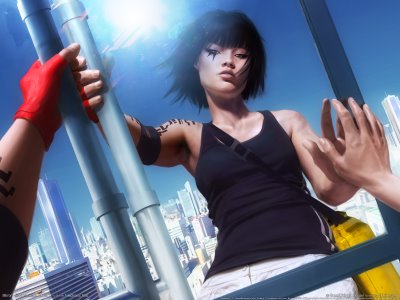
Mirrors Edge gameplay image. Available from:
(accessed 02/05/2011)

Assassins Creed gameplay image. Available from:


Final Fantasy 10 (Squaresoft, 2002)

Wednesday, 11 May 2011

Questionnaires

To gauge some thoughts on the topic of character representations, I got several people to answer a questionnaire I had constructed. These are some of the responses:

Questionnaire 1:


Questionnaire 2:

Questionnaire 3:
Questionnaire 4:
Questionnaire 5:


(Plus another answer I got via online messenger which is a little more detailed:)

Gender (Circle choice)           
Male      Female

Which videogame genre do you prefer? (Circle choice)

Action/Adventure          Fighting        First Person Shooter    

Puzzle           RPG       Simulation        Strategy        (Miscellaneous:  Sometimes, it also depends on the specific gameplay, regardless of general genre; any game can be well-made if done "right". )

How important is the way that your player character acts in game to you?
It may or may not be very important; In the end, it depends on the game itself. Is the main character someone the player creates themself, or is it one/several specific character/s? I personally love creating characters, but if they are too shallow, it kills some of the fun as well if the game focuses on the storyline. On the other hand, if the main characters are set from the beginning, it can be enjoyable in another aspect than with one you "design" yourself; they have a story, a past and a personality, and a logical way to interact with other characters. We need both types of games.

Has there been any particular game where a main character has irritated you or been hard to relate to? If so why was this?

I can recall a couple of games like those. One common example would be the Pokemon-characters. Even though they are set from the beginning, they don't speak, and are shallow in any other way than when they throw their Pokemon into the fight. This has both pros and cons; It's sad that they are shallow when you cannot form them yourself, while at the same time it's "stupid" to name a character freely if they have a set story. Mario could be one of those characters. Even though there are many games about him, there are no games where he speaks for himself, other than "Wahoo!" and "Mamma mia..", or a few times maybe an "Imma Mario!". Link would be one of those characters as well.

Basically this would mean that any shallow character that has a story, is a little frustrating. Even if they would talk, if the voice acting or their story was simple, like for instance many shoujo mangas or cheap shoujo animes, it's very frustrating. Actually even more if they have an interesting character design, where you'd love to know more about him/her.


Furthermore, does a terrible character design (both literal and personality-wise) have more of an overall negative effect sometimes than other key gaming elements executed badly (ie: bad gameplay, bad camera control, bad storyline, etc.)?

If comparing what is worse, a bad character design or a bad gameplay, obviously if you cannot play the game while the story and character is good, you can't play the game. You simply cannot enjoy even the most delicious cookies in a foul-reeking room, or if you've burnt your thongue just beforehand. It leaves a trace of dissappointment. Also the characters would most likely not be very good personality-wise if the storyline is bad; a character's personality does form the story more or less, after all.

Therefore, I'd say that bad gameplay would be the worst element. Myself, I prefer intuitive games where you learn the basics first and eventually gradually have new elements introduced to you. But still, if I were to fall in love with a character's design and/or personality, the chances of me to play that game would increase.

Good controls/gameplay is however still a fundament whether I would be able to play and enjoy the game or not. Much walking between places with nothing else happening and no nice scenery to watch and explore meanwhile? Boring, but tolerable if the storyline just makes you urge to the next location. Hard to fight enemies because the most vital buttons you have to press are placed in a way making it hard to use them around the same time? Simply frustrating. A storyline that makes you wonder why you even bought the game? Would maybe work for a good laugh with some friends. A short story? Works for me, if the gameplay was so amazing that I still would spend time playing the game inbetween the story itself.

In contrast, what has been your favourite character to play as? Do you think there is a particular reason for this (character design, storyline, personality, etc.)?

Hmmm. Tales of Symphonia was simply enjoyable, though I always enjoyed it the most while playing it with my sister. Tales of Symphonia 2, however, I enjoyed more to play alone, due to the difference in the characters you could play as (where you have 8 to choose from in ToS, you only had 2 characters that would stick with you all the time in ToS2). Here, the most enjoyable was both how the characters interacted, not the least all the skits/dialogues between them, for both of the games.

Other games I enjoyed, or have a fond memory of, is first Final Fantasy: Crystal Chronicles. The graphics and music were so astounding, and the character designs and classes so unique, I fell in love at once. Sadly, I was bad at playing it alone, and you needed two GBAs to play, so when my sister's GBA broke, that's also when we stopped playing the game. One of my hugest wishes, would be a remake of this amazing game, though it seems noone ever realized its potential. But enough about that.

Another game I love, is Avalon Code, due to the whole system; you have four summons, which you can interact with (you can even get together with them as boyfriend and girlfriend but nevermind that; though it was a sweet option, though sadly not very giving when it was achieved), and you can make your own weapons. You can either play as a boy or a girl, they don't talk, but are still integrated so deeply into the story, they fit in perfectly. The designs are very nice, and there are many small things to do all the time, like exploring (though you had to press the attack button to explore, so hearing them shout all the time while exploring could become tiring). Here, the storyline was so wonderful, you didn't get time to question your personality, also as well as you were able to answer in two different ways in some cases, giving you a more personal feeling of their personality. This affected, only slightly, the affection of others towards you.

Yet another game is Lux-Pain. The characters are interesting, and the whole story revolves around them. It's a very sad but attaching story, which you have to complete twice or so in order to collect all extra skits and other bonus material. The only sad thing about this game, is how the dialogue was messed up, where the voice acting sometimes gave different meanings to things than the written dialogue. It became tiring at times to try listening to "both versions of the story" even when getting used to it.

I could name a couple more games, though that would probably take too much time; Though one last game would probably be The first Pokemon game for GameCube, Pokemon Collosseum, I think the name was. The main character was so loveable, while the storyline was original and interesting, as well as darker as in most Pokemon-games. I would had probably loves it even more if it was even darker compared to the others, but being an awesome game with many interesting places, it's forgiven. Pokemon XD was allright as well, but it never game me the same feeling as Pokemon Collosseum.

Seeing it like this, there are many ways to enjoy a character, depending on the setting and integration of the story and character. Shallowness is the gamer's (mine at least) worst enemy.


Do you prefer playing as a character in first person or third person? And why is this?

Depending on the game, I'm more or less comfortable with a first person view. In most games I prefer the third person view, due to the feeling of being able to move and see where you are and what you're looking at and where you're headed to. Many first person views I've seen, can be confusing at several times, but I've also seen uncomfortable third person views, that were unpleasant due to being unable to adjust how zoomed-in you would be. Being too close to the character can create a block for your sight instead than the feeling of controlling the character.

If it's a shooting game, however, or a very dynamic combat game, first person view it is though. I've played and enjoyed two of those games, both being online games; S4 and Fantasy Earth Zero. Even though the second game was a third person view-game, it was integrated with the first person view aiming "circle" (I don't know the word right now, crossfire?). At least, you could choose between this integrated version and a normal third person view. It worked amazingly, and was fantastic. My only lack in the end, in S4, was players to play against, because it's often more fun to fight against people you know. In Fantasy Earth Zero you at least could meet somewhere, in a town etc and join a Guild (Corp in FEZ), giving you people to fight with and against.

In many games however, I enjoy the third person view solely due to the opportunity to watch your character, especially if the design is very pretty or you can change their equipment and with that their look. And watchign the enviroment; That's when the option to rotate the camera up and down and around and zooming in and out is simply the best.

Do you prefer games that offer a deeply customisable avatar with little backstory or a definitive “Protagonist” character with a deep backstory?

Like mentioned earlier, I prefer both. Being able to play both games with definite characters and games with highly customizable characters, are both enjoyable in their own way. If it's games like online games or with a different approach to storyline than most RPGs, I prefer having many customizable choices. Other times, you just want to dive into pre-made characters's back story and choices, where they are in charge, not you. Depends solely on the game and how it's handled.


Do you prefer characters that speak through recorded voice acting or textboxes/ sound effects? Why do you think this is?

I love when they speak with voice acting as well as with text boxes. However, the best thing I like is having both subtitles/text boxes along with them talking. The voice acting has to be good though. If it's half-assed voice acting, the game's often better off without the whole voice acting thing. If I know there's gonna be voice acting in a game, especially for DS, it tends to make me even more excited than without.

I think it's because voice acting also emphazises the mood of the characters, and makes them more alive. It's often also easier to really get the whole what-do-I-have-to-do concept and the general mood within the story, reading the character's mood and so on. Even if games without voice acting can be good, I just think they would be even more enjoyable with. The normal limitation has often only been the lack of space for additional voices/material on the game disc, from what I've heard.

Thank you for your time!


There is too much there to go truely in depth about now but what I found interesting was how seriously the answers were taken for some characters (clearly the issues or opinions were strong and that in itself is an interesting point).

Saturday, 7 May 2011

Case Study of the opening 5 minutes of RPG Final Fantasy 10


Final fantasy 10 begins with a close up of a selection of objects on top of a hill before cutting to a group of characters gathered around a campfire. As the camera pans around the characters, one stands up. He places one hand on a female characters shoulder as he walks past her. They share a glance before he slowly climbs up a hill. When he reaches the top an inner monologue cuts in. From this the player can already establish that this character is going to be their player character for the rest of the game because he uses a key phrase “Listen to my Story…”

The camera then fades to the title screen. When it returns a child is walking across a boat to join a growing crowd. The crowd begin cheering and the player character emerges from another craft opposite to them. From this the player knows that the Player character is well liked amongst the community (maybe even to the point of stardom – considering that his costume is mirrored by many small children holding balls) It’s at this point that the player gains “control” over the player character, and can navigate within the game world. While no specific goal is outlined, to further the story can the player must converse with the crowd, and from this those previous assumptions are proven to be a fact when the characters in the crowd ask for autographs. It is at this point that the player can name the player character. From the default name, the player character is known as Tidus, but this can be changed to whatever the player deems fit. Already the player can grow closer or detached to the character by the name they give to Tidus (it may be their own or something odd as a joke (hence detached is mentioned (although in some instances this might unconventionally create attachment to the character)).
Within moments of playing the game, through the reaction of other NPC (non-playable characters) the character has an idea of a few elements about the character “Tidus”.
-From the cheering crowd (and even the presence of a crowd), Tidus is a celebrity in his world.
-Since many small children are wearing his outfit and are carrying sporting like balls, Tidus is a sports star and his costume is in actuality the uniform of his sporting team
- From the conversations with a small group of female NPC’s it is clear that Tidus is both a Crowd Pleaser and has an outgoing personality (“If I score a goal, I’ll do this ...and It means it’s for you…”). Whether his outgoing personality is restricted simply to being a ‘Ladies Man’ is yet to be seen in the opening moments but yet his conversations with the younger members of the crowd suggest that he is generally outgoing.
- The sombre atmosphere and presence of characters not yet revealed (and a much more desolate locale) shows that the character Tidus has experienced much off screen before he reminisces.
- The way the female character looked at Tidus in the cinematic sequence was much different to that of other characters, and maybe indicated to the player that their relationship might be deeper than it seems.

After the character speaks to two members of the crowd, a non-interactive scene begins where three NPC begin to ask Tidus if he can teach them how to “Blitz” (which again from the previous two conversations, the player can deduce that this is the colloquial for “Blitzball” the sport that Tidus plays.). Tidus promises the kids that he will tomorrow but the boy from opening of the scene abruptly says that he cannot. Tidus turns and looks at the kid before saying “maybe …the day after”. The broken promise to the kids is another hint that the player character just wants to please others, while the awkward relationship between the strange boy and Tidus is somewhat foreboding.

When the scene changes, Tidus is seen to be rushing along a long walkway. As he stops, he looks up at a building where there is an older man on a television screen.  Tidus pouts and grunts disapprovingly before turning away. This is where player regains control. From that reaction the player discovers that the character does not like the mysterious figure on screen (that the resulting non diegetic radio commentary suggests is called “Jecht”). The player can then navigate down the long walkway – talking with various characters but cannot go back the way Tidus came (impossible action indicating that the player characters goal is something important).  When the player has passed the walkway, a predefined viewing frame activates.

The predefined viewing frame highlights a large amount of crowd that blocks Tidus. The player must push through the crowd (with Tidus occasionally saying “Hey get out of the way!” “I’ve got a game to play!”  -displaying a small amount of annoyance at the situation).  After the player gets through a cut scene activates. From the facial visuals, a clear Asian influence can be seen on Tidus’s design, and from the actions of the character in the “blitzball arena” shows a slight arrogance in the way he acts (he slams a player out of the water sphere, with a sly smile on his face) but the athleticism is shown in his leap from the sphere and almost overhead kick. At this point the appearance of a large creature that attacks makes him lose both his concentration and his arrogance. He panics as he grasps onto a thin platform before falling off screaming. When the cutscene concludes Tidus is seen climbing out of rubble. The camera cuts to a pre-defined viewing frame, and Tidus looks up and sees a man in red clothing leaning up against rubble (he too appeared in the cutscene). He cries out to the figure “Auron” (which the player can assume is that character’s name). At this point the player regains control.

Already the player has learnt quite a lot about the personality, physical state and the game world’s view on the character of Tidus. As play continues, so does the players understanding of Tidus (a little after that mysterious figure Jecht is revealed as Tidus’s “old man” and also Tidus’s inexperience with a weapon also comes to the forefront when he is presented with a sword off Auron “from Jecht”.

Several audio visual techniques are crucial to the success of those representations. Firstly the signifiers created by the crowd cheering indicate the worlds view on tidus. The dialogue and inner monologue play an important part also in revealing what Tidus is like to the NPC’s in his world (outgoing, a little arrogant, willing to please). The character design, placement of that design on others all attribute to the players early understanding of Tidus’s profession while his facial animations reveal a little of what he thinks.
Plus the use of the Sjuzet in Final Fantasy 10’s opening scene has been beneficial to setting the scene. Placing the player immediately in a scene quite removed from the opening (and they have no idea where) before returning to the start gives the story and the actions of Tidus urgency. Also as the player completes the “Zanarkand” segment of the game, already they are moving through “the Hero’s Journey” (as explained in Video Game Spaces). The ordinary world (fame, friendships and success), the immergence of a mentor (Auron) and the destruction of Zanarkand (and thus the ordinary world) -They all are steps on the Hero’s journey.

Friday, 6 May 2011

"Beyond Fantasy" Quotes for essay

These were just a few quotes from the amazing Beyond Fantasy DVD that I think are perfectly fitting of tmy topic:

Motomu Toriyama (Director) –event –

“…For me finding a way to imbue as much as possible the games characters with the realistic qualities of the actors was the main goal.”

Kazushige Noijima
Scenario

“I worked on the scenario for FF VII and VIII, and the relationship between the main character and the player. “Tidus and The Player” is what I’ve always been concerned about. I’ve wanted to transform that relationship into something new. In VII, the character was reserved so I tried to find ways for the player to imagine what was going through his mind. The hero of VIII was also reticent, but I tried to get the player to feel more attached to him by having him disclose his feelings, although the other characters couldn’t hear his thoughts. This time, by having the character reflect on the past, we have two facets to him: a character who moves through the game as well as a character who reflects on the past. And then we have the player who is in a completely different world. I wanted to do something contrary to what I’d been trying to do before, where I tried to bring the player and the character closer.”


Tetsuya Nomura
Character Designer

“When the world was first set there was an overall Asian flavour to it and there were many elements that were inspired by Thailand and the South Pacific. These elements reflected the location of the southern islands, and the Asian flavour was prevalent throughout. Since japan also exists within Asia, I wanted to incorporate Japanese touches as well.”


Fumi Nakashima
Sub-character Chief

The aspect I concentrated on most was giving characters from different regions and cultures distinctive styles of clothing. For example, the Al Bhed are people who function in a machine oriented society, so I wanted to make them stand out from other citizens of Spira. I purposely had them wear goggles and masks in order to make them appear strange and eccentric.
The Ronso are a warrior tribe so I gave them features  that would allow them to engage in battle easily.”

Koji Sugimoto
Main Programmer
-Character-

(On the Playstation 2) “It’s been said that the PS2 is a very complicated piece of hardware and that development is complex. That’s indeed true and it’s taken a long time to master it. But the harder you try to push the hardware, the more rewarding the results. This is where the machine shows its true potential, and it’s fascinating. For example the detail on Yuna’s long sleeves and Tidus’s hood, specular shine and shadows – elements which were difficult to program before can be rendered more realistically, I think.”

Thursday, 5 May 2011

Assassins creed design quotes (essay reference materials)

Just a few interesting quotes about the design of Altair from Ubisofts "Assassins Creed" (sourced from the Limited Edition Artbook).  These will be good quotes to reference in my essay as it mentions the conceptual stages of design aswell as Focus group sessions.


“We had different concepts: we had maybe three, four different phrases for the main character. The first one that was maybe more classical: the Sands of Time  team worked on the concept, so maybe it was too close to Sands of Times character design, it was maybe more romantic, more …Arabian Nights? Then it went more and more edgy and stylised, so …the character had first maybe too much fabric, was too round and then it became more edgy, more stylised…I think thinner also. We made parallel with the bird of prey.

So first it was more like a knight, then after, we used a very specific for him, made the parallel between the bird of prey, jumping on his prey. The reference to the eagle and main character is one of the coolest aspects. You have the beak of the eagle, you see it in the hood. In the cape, you can also find, in some animations, the stylization of the wings, and these subtle elements.”

Raphael Lacoste (Art Director)


“We did some focus group testing early on with the character. We knew already that Altair would look the way he does now. I knew assassins at the time wore white, and they had red on them, and they had cloaks and everything, so I gave my direction to the art guys and this was the first draft, and when we put it in 3-D, that’s where we did some iteration, but we went to focus group with that dude, and people already said “Yeah, I want to play that character.” So we knew we had something.

But since we wanted to create the brand we asked, is the 12th century enough? Is it really a strong idea just to play assassin during the crusade? Maybe it’s better to have a way that we could tell the entire assassins story, or history, multiple different assassins and that’s where the present came in. I’m really into justifying elements of a game. I don’t like video game stuff put on the top of the main action just to say it’s a video game. You need a health bar, and an inventory and stuff like that, I like to justify why. “

Patrice Desilets (Creative Director)               

Wednesday, 4 May 2011

"Building and Reconstructing Character - A Case Study of Silent Hill 3" Essay analysis

Given that my research project is centred on the “protagonist character”, and what representations are used by development teams in the construction of said characters, Petri Lankoski’s “Building and Reconstructing Character. A Case Study of Silent Hill 3” seemed like an excellent place to look for an in depth account of a character.
Lankoski begins the paper by stating the importance of the player character and the fact that they (if successful) could leave a good lasting impression about the game. This point is evident when you consider the culture of Cosplay that has flourished over the last few years, where people worldwide will spend a great amount of time constructing costumes to be able to take the “persona” of their favourite video game or anime character. Clearly from these examples the characters constructed in games have influenced the player, instead of the conventional opposite.
But Lankoski even as early as the introduction, mentions the argument that constructing a game personality for the player character is particularly problematic.  
However, there are multiple methods used in games to inform a player about the nature of a player character: pre defined functions, goals, possible and impossible actions, and more traditional audiovisual means.”
It is these means that he explores in his essay, through a thorough case study of the Silent Hill 3 protagonist (and player character), Heather. To categorize how the personality of the player is perceived, Lankoski defines them as follows:
-          The goal and sub- goals of a player character (goals limit plausible actions for a player if s/he wants to progress in a game).
-          Possible and impossible actions (what a player/ character can and cannot do, and which are hard to do in the game)
-          Predefined functions of a player character (e.g. cutscenes, pre-designed dialogue, movement style, gestures and facial expressions)
In addition games use traditional audiovisual methods to reveal a player character like the external features of a characters (body,face,voice), proper and titular names, how other characters react to the player character, how the character is described by other characters or in game material and pre-existing knowledge about the character.
Already these categorizations form a useful guide at examining a video game character, but his subsequent look into Heather is quite insightful due to the analytical method and detail. From the essay I highlighted some of the crucial areas he looked at:
“Silent hill 3 starts to feed information about the player character in the user guide.”
“ Heathers goal: survival”
“...possible and impossible actions are used in this game to highlight how Heather really is quite an ordinary girl: the player needs to activate a special mode by pressing and holding down a button in order to get Heather ready to fight...”
“The dialogue (a player can hear and read only Heathers part of it)”
“Heather refuses to discuss with Douglas and escapes to the ladies room, which ends the cutscene. If the player tries to return to the hallway where Douglas is, Heather will refuse (possible and impossible actions and predefined function), written monologue.”
“The information revealed in pre-defined functions sets up the theme of the game; a journey to Heathers forgotten childhood. It also seems that a player mostly learns Heathers past at the same phase as Heather remembers details”.
Already a pattern begins to immerge about some of the techniques used by a developer to get Heathers personality across to the player. By limiting their actions with reasons (i.e.: Heathers an ordinary girl and as such struggles to fight shown by the fact a special mode has to be activated to fight, if she does not want to do something she will tell the player, etc). Furthermore by limiting the players “vision” into the game world (only hearing Heathers side of the phone call, only learning about Heathers past when she does, etc) it can maximise the opportunity for the player to “bond” with the character of Heather through shared receiving of particular information. The player can sympathise with her reactions this way much more than knowing the whole story and watching her “catch on”. This is really a method of the developer of controlling the Sjuzet of the story aswell, as via dream sequences, surreal moments out of the games chronological order, etc the player is both experiencing the twists of the narrative – in addition to the earlier point of bonding with the character. It’s interesting because it shows how closely linked the creation of a character is with all other aspects of the game.

The essay continues to go into the other parts of the early stages of play, identifying areas that bring up the classifications used by the author Lankoski, but it has already proven invaluable as it has opened my eyes to the broad spectrum of elements that are important to a “good” protagonist character – well a better phase would be complete protagonist.
I also looked at the essay: Games, Montage and the First Person Point of View (Michael Nitsche) but it simply covered a volume of the points brought up in this book: Video game spaces, which was a little disappointing – but the essay talked about an interesting topic of the switch between camera angles. Is it a montage? And if so what does it mean? Unfortunately though this isn’t really relative to my essay topic so I won’t be referencing it.

Monday, 2 May 2011

Topic for research

Over the last few weeks I have struggled to find a specific point in which I want to look at in my research but yesterday I finally focused and found a suitable question to ask myself:
How do representations create and aid a video-game character in achieving a completely immersive video game space?
Now, from that it may seem a little vague and confusing as the wording is not perfect, so I’m going to bullet point some of the key points I want to explore (both for you as the reader and for my own reference):
What is a representation that could be applied to a character for an effect? (Clothing, dialogue, backstory, personality, gender, ethnicity)
How does a developer approach character design to ensure complete immersion into the narrative space via a character?
Does the Fabula and Sjuzet have some bearing over how a character is represented to the player?
The use of ‘Avatars’ over a set character? What effect does this have?
The player’s placement in the world? Does that govern how a character is represented to them personally? (Camera Angle (does an Third Person viewpoint carry just as much affect as a first, etc.)

Does the viewpoint effect your relation with a character?


Does soundscape have any overall effect also?

For research into this I do have a few areas to explore:
Primary: Game Playing and asking gamers questions relative to one/ all of these questions
Secondary: Journals of Virtual Game Research, and documentaries of video games (Beyond Fantasy, Mass Effect, Etc. (for the developer’s viewpoint))
Last post I discussed looking at a book centred on gender but from my understanding on the book from another that has read it, it seems like it is irrelevant – instead focusing on the placement of gender within the industry (a perfectly viable topic but still) – not in games. This is disappointing because there is a lot to the placement of a female character (especially protagonists) within a game and what that causes. Still it is an area I shall have to explore without the aid of that book it seems.

(accessed 02/05/2011)